


If you've spent any time shopping for a diamond, you've come across the word “inclusions.” Maybe it was on a grading certificate, maybe a sales associate mentioned it, maybe you Googled it at 2am trying to figure out whether the stone you were looking at was worth what someone was charging. Either way, inclusions are one of the most misunderstood factors in diamond buying, and the confusion costs people real money.
Let's clear it up.
What Inclusions Actually Are
An inclusion is an internal characteristic of a diamond: a natural imperfection that formed as the crystal grew. It can be a tiny fracture, a mineral deposit, or a structural irregularity locked inside the stone. In natural diamonds these formed over billions of years under extreme heat and pressure deep in the earth. In lab-grown diamonds the same physics applies, on a compressed timeline.
Every diamond has a clarity grade reflecting the presence, size, type, and location of its inclusions. The scale runs from Flawless (FL) at the top, meaning nothing visible even under 10x magnification, down to Included (I) at the bottom, where inclusions are visible to the naked eye and can affect the stone's durability.
Myth vs. Fact
Myth: Diamonds can't break.
Fact: Diamond is the hardest natural material, but a hard knock at the wrong angle can still chip it. That's exactly why surface-reaching feathers matter.
Myth: Inclusions are just flaws.
Fact: They're also a diamond's fingerprint. No two stones have the same pattern, which helps identify a specific diamond.
Not All Inclusions Are Equal, and Some Are Genuinely Dangerous
This is where most buying guides stop at the surface. The type of inclusion matters as much as the grade, and some types are far more problematic than others.
The one that concerns me most as a jeweler is a feather, a small fracture inside the diamond. On its own a feather might seem harmless. But a feather that reaches the surface creates a structural weak point. Over time, with daily wear, impact, or even the pressure of setting, that fracture can spread. A stone with a surface-reaching feather is a stone that can crack. I won't use one.
Cavities are voids in the diamond that compromise its structure. Knots are inclusions that extend to the surface, creating another point of vulnerability. These aren't just cosmetic issues. They're durability issues, and a diamond is supposed to last forever.

Feather, cavity, knot: the three I look hardest at before I'll set a stone.
Then there are black carbon inclusions, the ones most visible to the naked eye. A black carbon inclusion is literally a dark mineral deposit trapped inside an otherwise brilliant stone. Under a loupe it looks like a tiny black dot. In the right light you can sometimes see it without magnification, sitting inside what's supposed to be a window of pure light. It's the inclusion people react to most when they see it for the first time, and rightly so.
Where the Inclusion Sits Matters as Much as What It Is
Here's something most buyers don't know and most retailers won't tell you: the location of an inclusion is just as important as its type or size.
An inclusion dead centre under the table, the flat top facet of the diamond, is the worst possible position. It's the first thing light hits when it enters the stone. Depending on size and type, it can interrupt brilliance, show up as a visible flaw face-up, and drag down the stone's appeal dramatically.
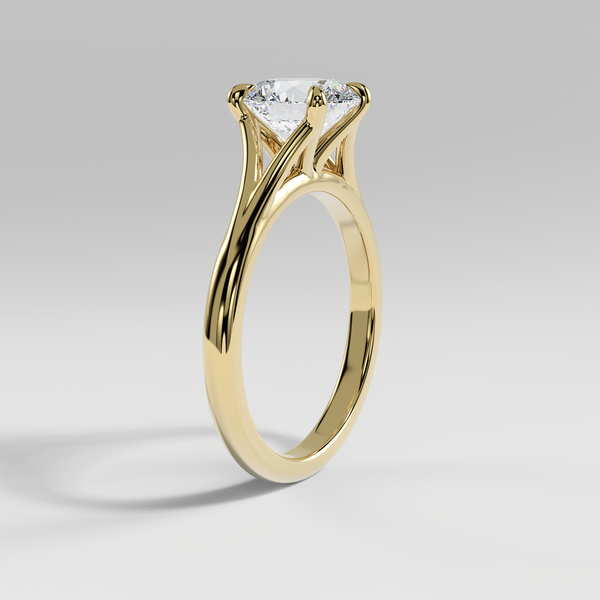
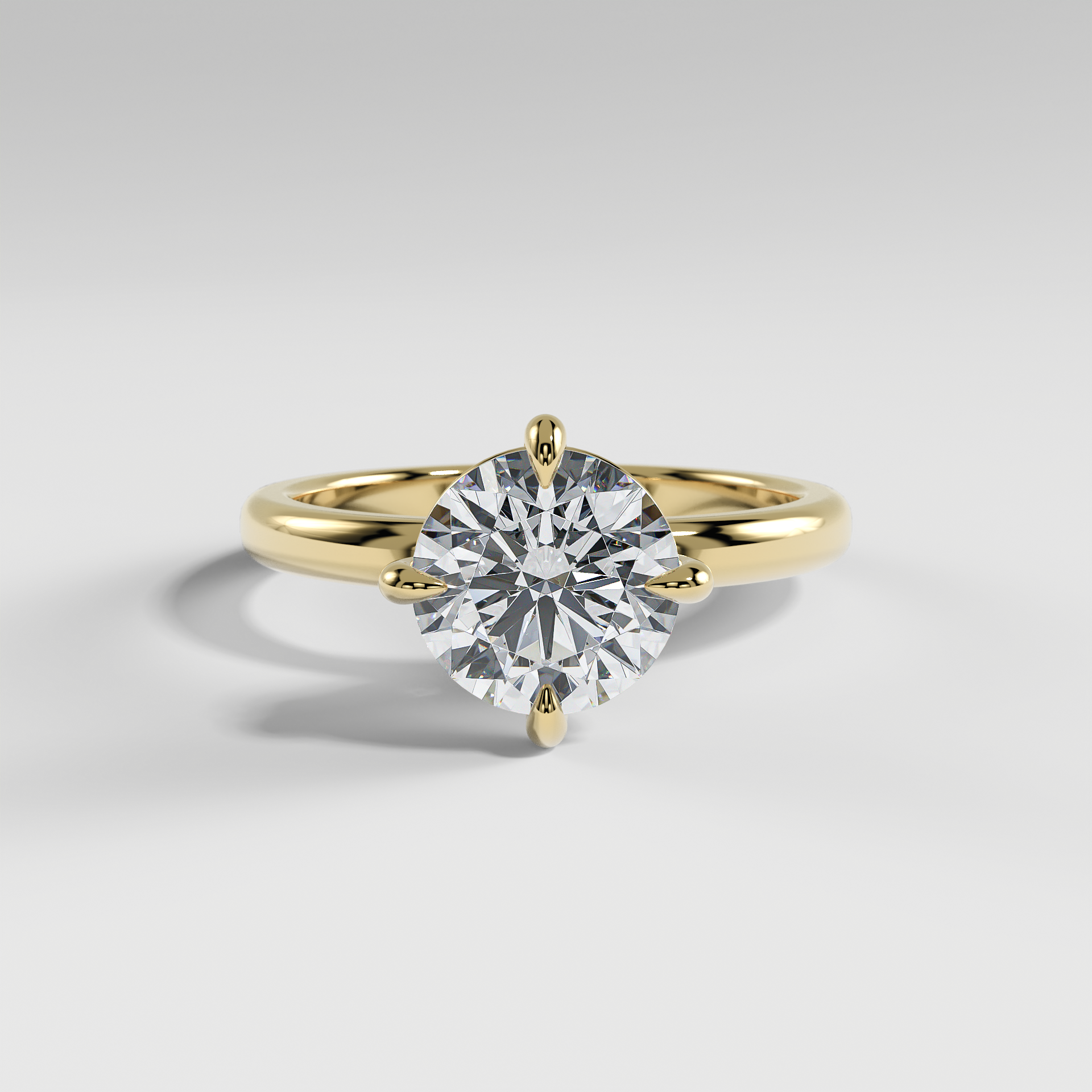
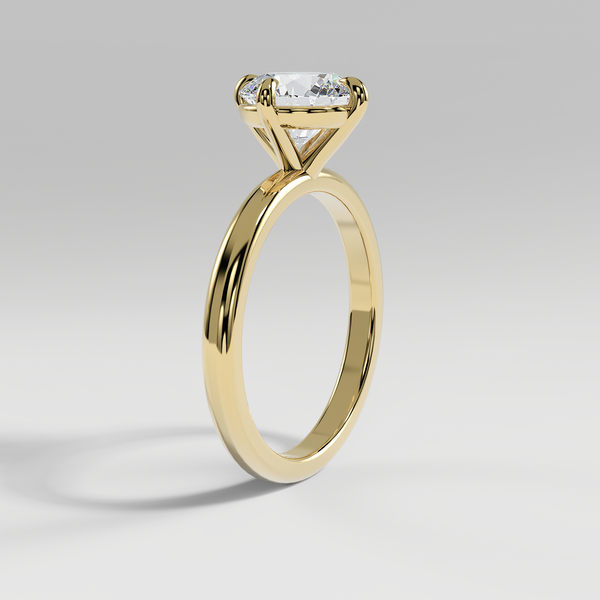
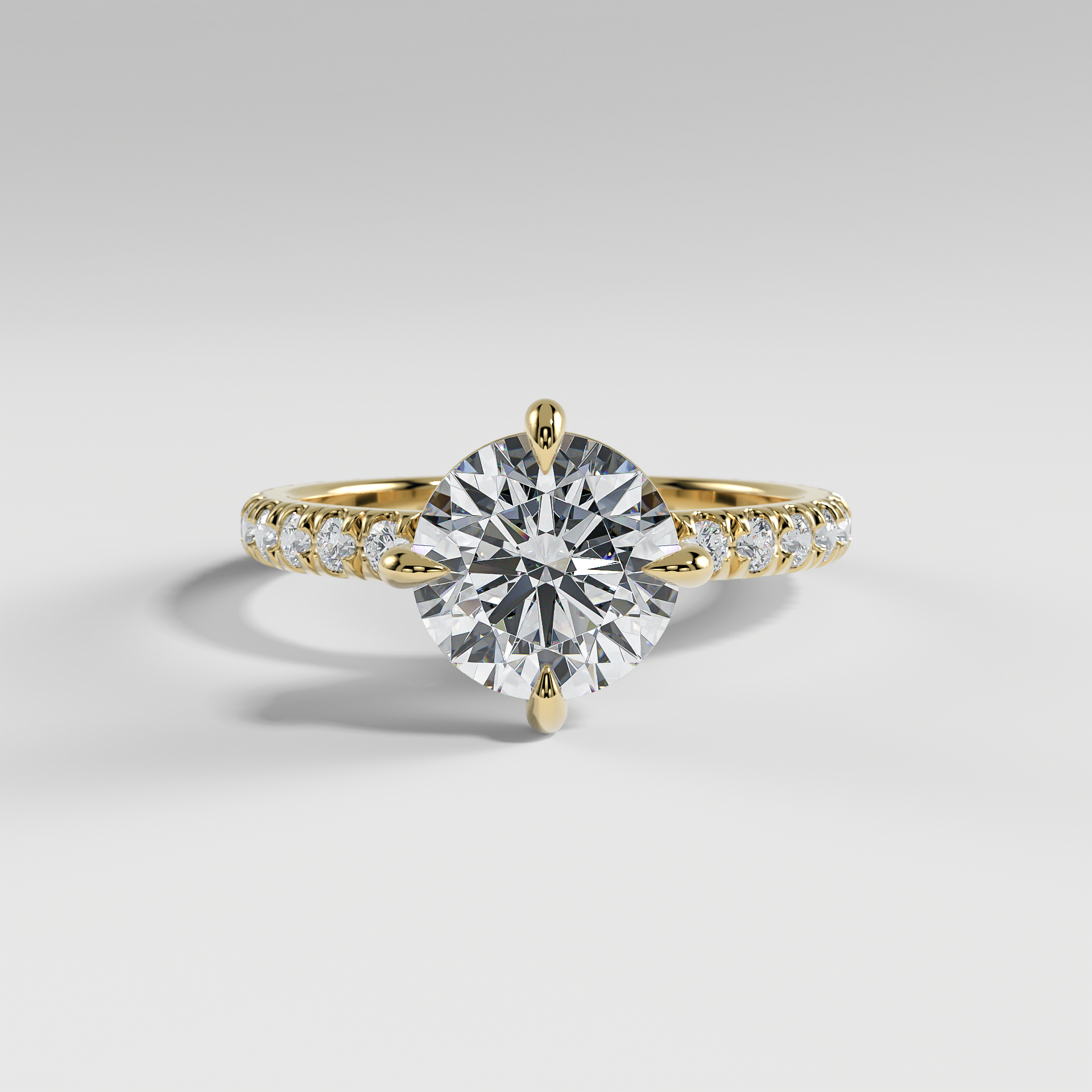
An inclusion near the girdle edge is far less of a problem visually. And an inclusion near where a prong will sit? That's actually workable. When I'm sourcing stones for clients, I read the inclusion map on the grading report with the finished ring already in my head. If a characteristic sits near a prong position, I know it can be set over: hidden beneath the metal, invisible in the finished piece, with zero impact on how the stone looks.
That's not luck. That's knowing what you're doing.

A small crystal near the edge can disappear under a prong. A feather in that same spot is a different story.
The Lab-Grown Difference, and Why It Changes Everything
Here's a fact that surprises most people: with lab-grown diamonds, eye-visible inclusions are genuinely rare. Not because the grading standards are lower, but because supply is so abundant that there's almost no reason to settle for a low-clarity stone.
Natural diamond supply has long been tightly managed by a small number of large mining companies that control how many stones reach the market at a time, which is a big part of why prices move the way they do.
It's not rarity driving the price, it's a vault. When they open it, prices drop. When they close it, prices rise.
The average buyer ends up constrained by budget, not because good natural diamonds don't exist, but because the ones that do are fed into the market slowly to keep them scarce. That's where you start seeing brown tints, black carbon inclusions, and SI2 grades becoming “acceptable.” Not because they're the only option, but because they're the only option at that price point.
Lab-grown diamonds changed that equation completely. Because they can be produced at scale and at consistent quality, the selection of VS-and-above stones is enormous, and the price reflects that. Our lab-grown diamond inventory starts at a VVS–VS clarity floor, so every stone you're looking at is already in the top tier of the clarity scale. You're not choosing between a good stone and a bad one. You're choosing between exceptional stones.
From the Bench: Same Budget, Better Diamond
A client came to me after losing their ring. They hadn't bought from Mad Minerals originally. Their previous stone was a natural SI2 with a light brown tint. Not terrible, but not a stone that made you stop and stare. Their insurance paid out based on the original appraisal, and they came to me to replace it.
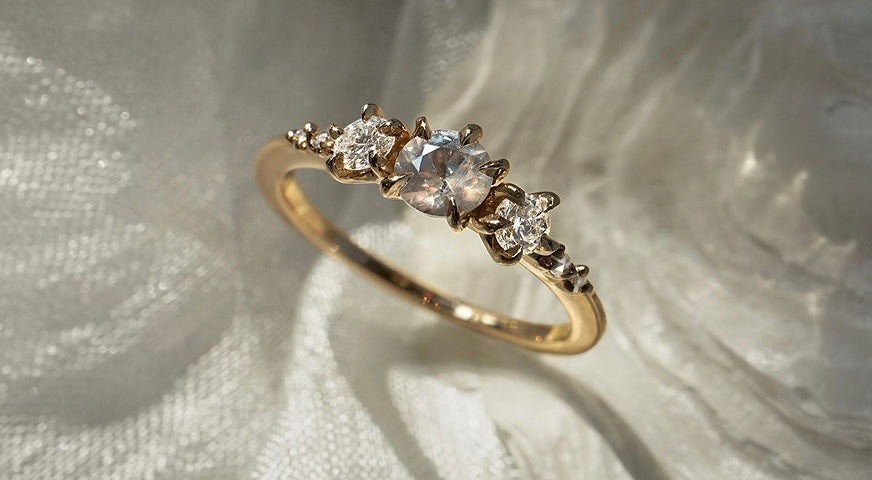
With their insurance money and access to our sourcing, I found them a beautiful champagne VS1 diamond: better clarity, more character, more personality in the stone, for the same amount the insurer paid out. Their new appraisal came back higher than the original.
Same budget. Better diamond. Higher insured value.
That's what happens when you understand inclusions, know how to read a grading report, and have access to the right inventory. The difference between an SI2 brown and a VS1 champagne isn't just a grade on a certificate. It's visible, it's real, and it matters for the life of the ring.
Read a Grading Report in 60 Seconds
- Check the clarity grade. VS2 or better is typically eye-clean.
- Look at the plot, the little diamond map. Where are the marks? Dead centre under the table is the worst spot.
- Read the key. Watch for feathers, cavities, and knots, especially near the edge or surface.
- Ask your jeweler whether any inclusion could sit under a prong once the stone is set.
The Bottom Line
Inclusions affect diamond cost, but not equally. With lab-grown diamond engagement rings, top-clarity stones are so accessible that there's genuinely no reason to compromise. Know which inclusion types to avoid, remember that placement matters as much as grade, and buy from someone who reads the grading report with the finished ring already in mind.
That's the difference between a diamond that lasts a lifetime and one that doesn't.
Ask the Jeweler
Got a question about a diamond you're looking at, or a ring you already own? Send it to me. I answer the best ones right here in Questions Before the Big Question.
Next in the series: You've chosen the stone. Now, what's it worth on paper? Are Jewelry Appraisals Legitimate? Here's What You Actually Need to Know →
Questions Before the Big Question: the Mad Minerals blog series.
About the author
Jeffery founded Mad Minerals in 2018 in Montreal to make high-quality lab-grown diamond engagement rings and custom jewellery. He writes The Loupe to answer the questions people actually ask before they buy.