



I've been in this industry long enough to know how the pricing works from both sides of the counter. I source diamonds at wholesale, I make the rings, and I sell them directly. That position gives me a view of the numbers that most buyers never get to see. Once you understand what's actually happening with lab-grown diamond pricing, you're going to look at the big retailer websites very differently.
Let me show you exactly what I mean.
First, a Diamond Is a Diamond
Before we talk price, let's get one thing straight. A lab-grown diamond with the same shape, carat, color, clarity, and cut grade, verified by an independent grading report, is the same diamond whether it comes from a big-name retailer or from my bench. Same chemistry, same hardness, same fire. The name on the box doesn't change the stone.
What can differ is whether the stone actually looks the way it should. Grades don't tell you everything. Some lab-grown stones can look slightly milky or hazy, or lack life, even with good numbers on paper. Every diamond I sell is one I'd be proud to set: brilliant, never milky, eye-clean, and vibrant. That's the standard, every time.
Same grades, same certificate, same diamond. The only real difference is the price tag.
Myth vs. Fact
Myth: You can spot a lab-grown diamond by eye.
Fact: Not even a trained jeweller can. Telling a lab-grown diamond from a mined one takes specialized lab equipment.
Myth: Lab-grown diamonds are brand new.
Fact: The first lab-grown diamonds were made back in 1954, by scientists at General Electric.
Don't Pay for a Grade You'll Never See
Every lab-grown diamond comes with a clarity grade. VS1, VVS2, SI1: these grades sit on a scale and they affect price. The industry has done an excellent job of making buyers feel like each step up the clarity ladder is a meaningful jump in quality worth paying for.
Here's what they don't tell you.
Take a VS1 and a VVS2 of the same size and color. Neither stone has inclusions you can see with the naked eye. Both look stunning. The difference only shows up under a gemologist's loupe at 10x magnification. Not on someone's finger, not in a photo, not in real life.
Past a certain point, a better grade is something you pay for but never see.
The Sweet Spot: E Color, VVS2 Clarity
A D color, VVS1 clarity diamond sounds better on paper, and it usually costs more. But put a D VVS1 and an E VVS2 side by side and you won't be able to tell which is which. If you're paying extra for that step up, you're paying for the certificate, not for anything you'll ever see.
Side by side on a finger, a D VVS1 and an E VVS2 look exactly the same.

That's why, when a client asks me to choose, I point them to an E color, VVS2 clarity stone. It's genuinely top-tier, without paying for differences only a loupe can see. And if a D VVS1 happens to be priced close to an E VVS2? Then take whichever one you love. You can't go wrong.
From the Bench
Every diamond on my site comes with a video of the actual stone, and that's on purpose. A certificate can tell you a stone is VVS2, but it can't tell you whether it's bright and lively or a little milky. A video gets you very close. Seeing it in person is still the best test, so I check every stone myself before it's set. If one doesn't meet my standard, I contact the client and replace it with a stone that does.
The Same Ring, Four Prices
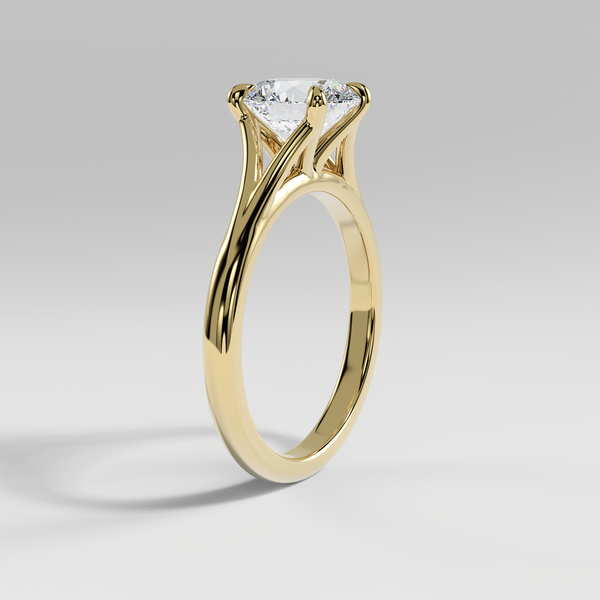
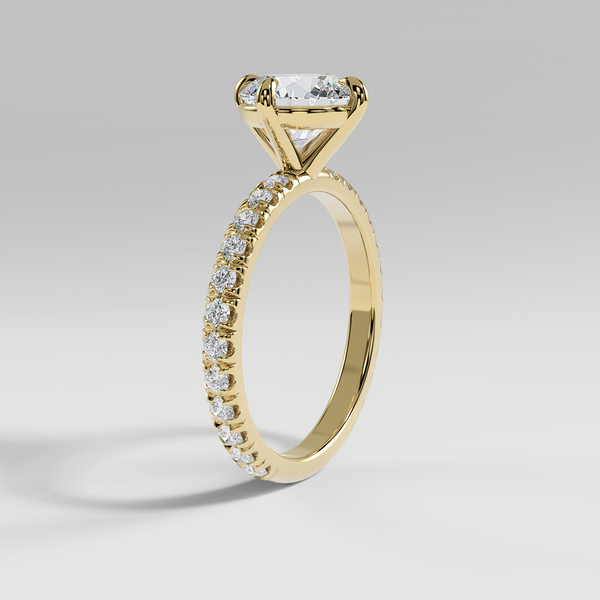
Now let's look at a whole ring. I priced the same design at three of the biggest names in lab-grown diamonds: an oval solitaire in 18k yellow gold with a 2 carat, E color, VVS2 lab-grown diamond.
| Retailer | Centre stone | Price (CAD) | You save at Mad Minerals |
|---|---|---|---|
| VRAI | 2.06 ct oval, E, VVS2 | $6,186 | $2,785 |
| Cullen Jewellery* | 2.02 ct oval, E, VVS2 | $5,483 | $2,082 |
| Brilliant Earth | 2.05 ct oval, E, VVS2 | $5,125 | $1,724 |
| Mad Minerals | 2.01 ct oval, E, VVS2 | $3,401 | — |
*Cullen's Canadian price includes duties and taxes. Other prices shown before tax. All prices taken from each retailer's Canadian website in October 2026.
Same shape, essentially the same carat weight, same E color, same VVS2 clarity, same 18k gold. Up to 45% less. On a purchase this size, that's a honeymoon, a wedding band, or a serious dent in the wedding itself.
Same ring. Same 2 carat E VVS2 oval. $1,724 to $2,785 less.
Some retailers also make it hard to see where that money goes. Cullen Jewellery, for example, bundles the diamond into the ring price. There's no line item for the stone. You choose your clarity and carat weight and the total updates, but you have no way of knowing what the diamond costs versus the setting. I think that's worth pointing out.
Why This Happens (and I'm Not Calling Anyone a Crook)
I want to be clear. Large retailers aren't doing anything illegal. Markup is a reality in every industry, and retail overhead is genuine: locations, staff, marketing, returns, certifications, brand building. Those are real costs.
What bothers me isn't the markup. It's that the pricing structure in this industry makes it almost impossible for a buyer to understand what they're actually paying for. Diamond costs get bundled into ring prices so you can't comparison shop. And the person buying, who is usually spending more in one transaction than on anything except maybe a car, is navigating all of it with almost no real information.
I've built my business on the opposite of that. My prices aren't carrying showrooms, sales floors, or national ad campaigns. You're paying for the stone and for a ring made by hand, and every customer who asks me a direct question gets a direct answer. Browse my lab-grown diamond inventory and compare for yourself.
What Actually Matters When You're Buying a Lab-Grown Diamond
The grade on the certificate is one factor. But can you see the difference between a VS1 and a VVS2 in a finished lab-grown diamond engagement ring? You can't. What actually matters is whether the stone is brilliant and lively, eye-clean, free of any milky haze, well cut, and whether the price you're paying reflects the stone you're getting, not the overhead of whoever is selling it to you.
A VS1 E and a VVS2 E are both exceptional stones. Before you pay extra for a clarity grade you'll never see, make sure you understand what you're actually buying, and compare the prices for yourself.
Before You Buy: 4 Quick Checks
- Is it graded by an independent lab like IGI or GIA, and can you look up the certificate number yourself?
- Is there a video of the actual stone? Photos can hide a milky or lifeless diamond.
- Can you see what the diamond costs separately from the setting?
- Are you paying extra for a grade you'll never see on a finger?
Ask the Jeweler
Got a question about a diamond you're looking at, or a ring you already own? Send it to me. I answer the best ones right here in Questions Before the Big Question.
Competitor prices were taken from their Canadian websites in October 2026 and may change over time.
Next in the series: Clarity grades are only half the story. Do Inclusions Affect Diamond Cost? Which Ones to Avoid, and What the Industry Won't Tell You →
Questions Before the Big Question: the Mad Minerals blog series.
About the author
Jeffery founded Mad Minerals in 2018 in Montreal to make high-quality lab-grown diamond engagement rings and custom jewellery. He writes The Loupe to answer the questions people actually ask before they buy.